Supercharge agents with target context
Hand agents your architecture, your policies, and the risks you already accepted. They apply it on the next run and stop re-reporting decisions you made on purpose.










How it works
Agents test from an attacker's position by default. Context is how they learn what you already handled.
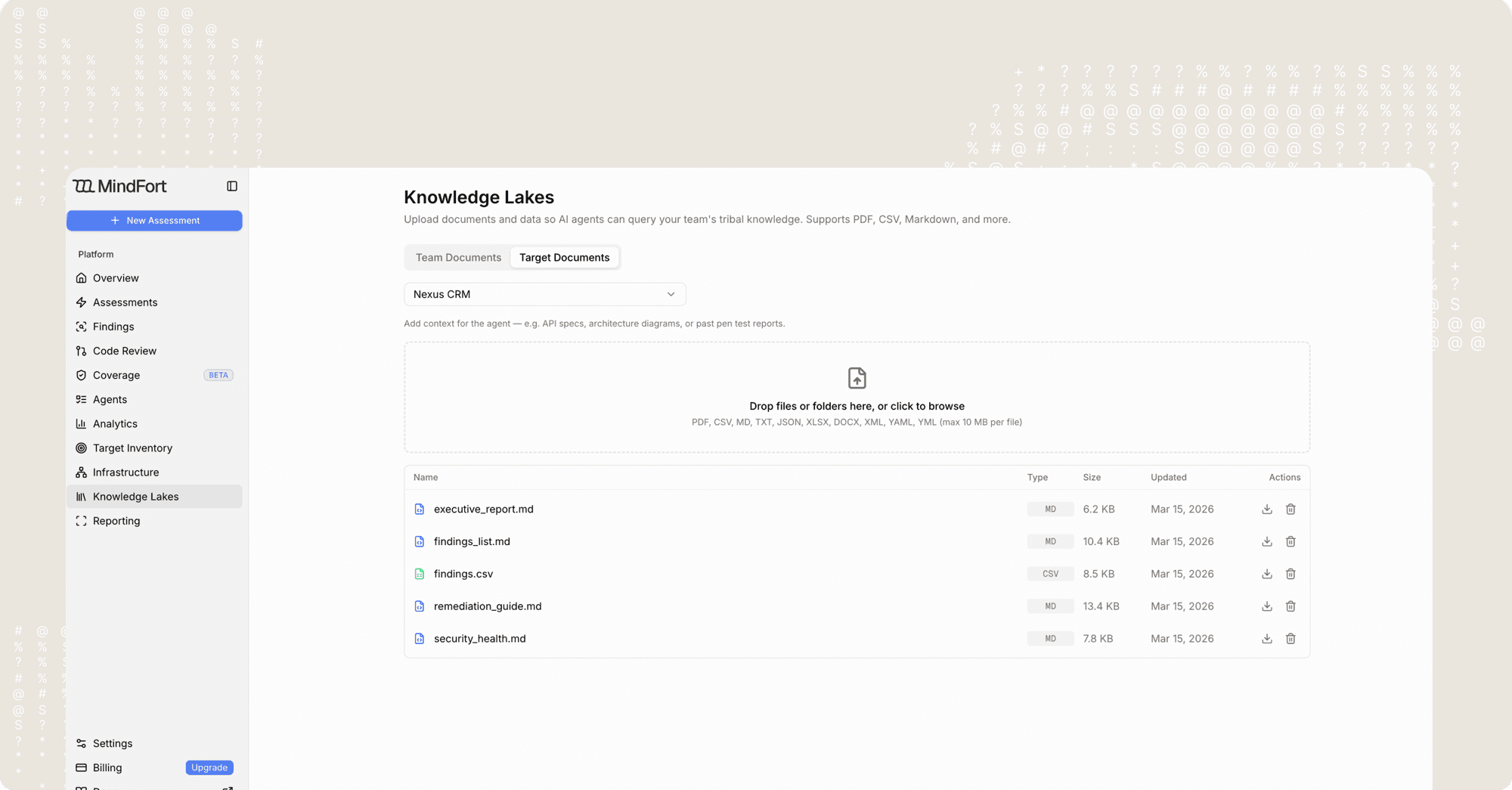
Upload what you have
Network diagrams, API specs, architecture reviews, security policies, previous pen test reports. Agents organize it themselves, per target or across the whole team.
Agents apply it while testing
With your context in hand, agents skip the ground you've already covered and spend that effort probing deeper, surfacing more of what you haven't caught yet.
Triage more effectively
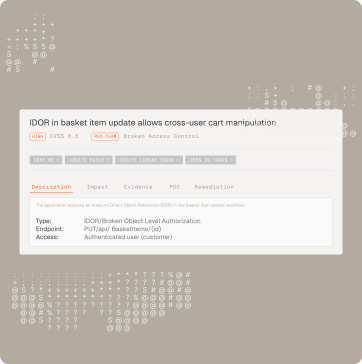
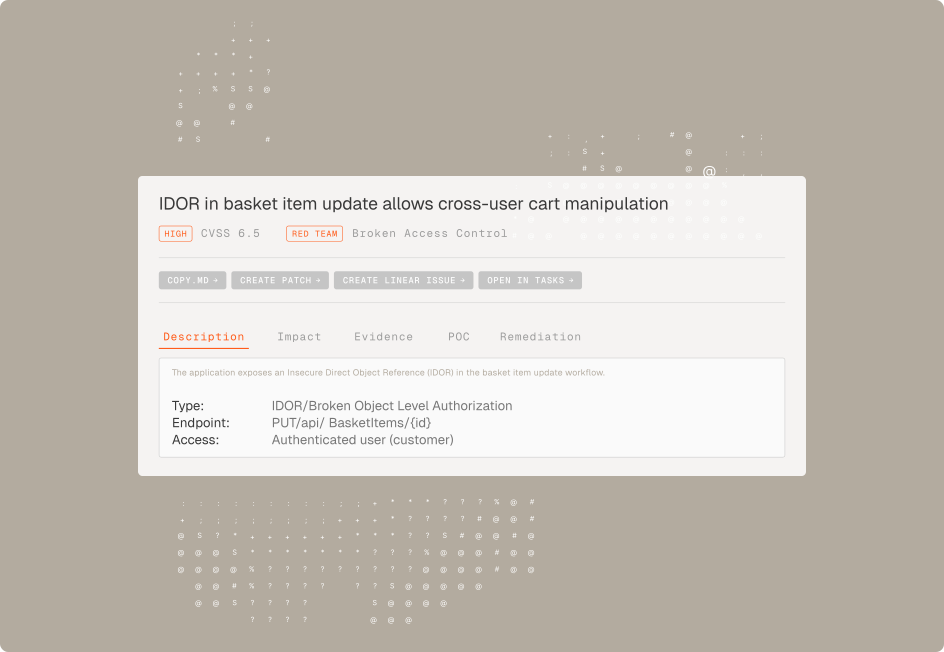
Agents use your context to score vulnerabilities more accurately.
Agentic Control System
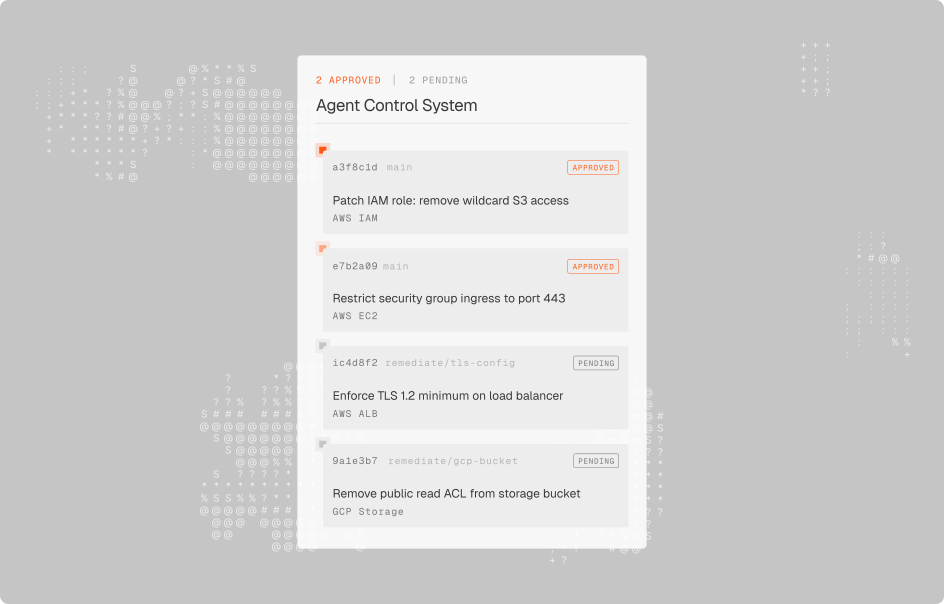
Agents fix more than code. When they change cloud configs, network policies, or infrastructure, the Agentic Control System records every change, routes it through approval, and lets you roll it back. Think git, for everything that is not code.
Version control
Every agent-made change is versioned with full before/after state, so you always know what changed and can roll back.
Approval workflows
Route changes through your existing approval process. Agents propose, your team approves, agents apply.
Full audit trail
A complete history of every remediation: who, what, when, and why. Built for compliance.
Speed with control
Agents move fast. The control system means they never move faster than your visibility.
Security that gets better the longer it runs
Agents never start from scratch. They remember your stack, your deploy patterns, and your defenses, so every run starts smarter than the last.
Environment-aware testing
Agents map how your teams build, deploy, and configure systems, tailoring their testing and remediation to your specific stack and conventions.
Continuous context building
Every operation deepens an agent’s understanding of your environment. Past findings, infrastructure changes, and deployment patterns all inform future runs.
Adaptive attack strategies
Agents remember what worked and what didn’t. They evolve their approach based on your specific defenses, getting sharper with every cycle.
Efficient at scale
Agents skip re-discovering what they already know. That time goes into deeper testing and broader coverage.