The platform for autonomous security agents
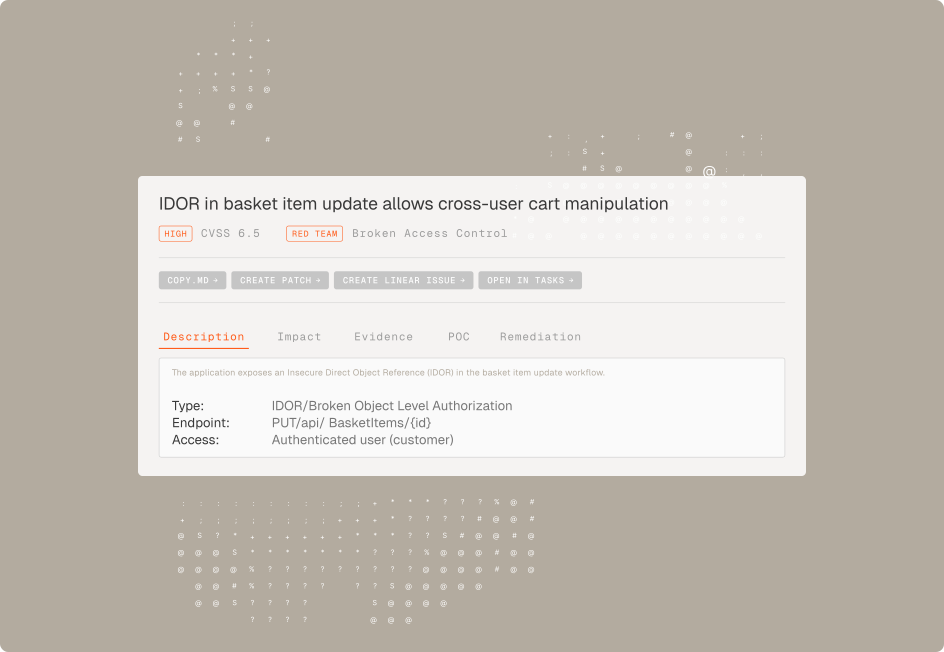
Deploy agents across your apps, APIs, cloud, and network. They find vulnerabilities, prove each one with a working exploit, and open the fix.
How MindFort works
Two Ways to Deploy
Black Box
Agents attack with no knowledge of your codebase, exactly like an external attacker.
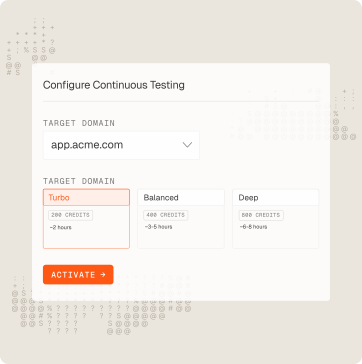
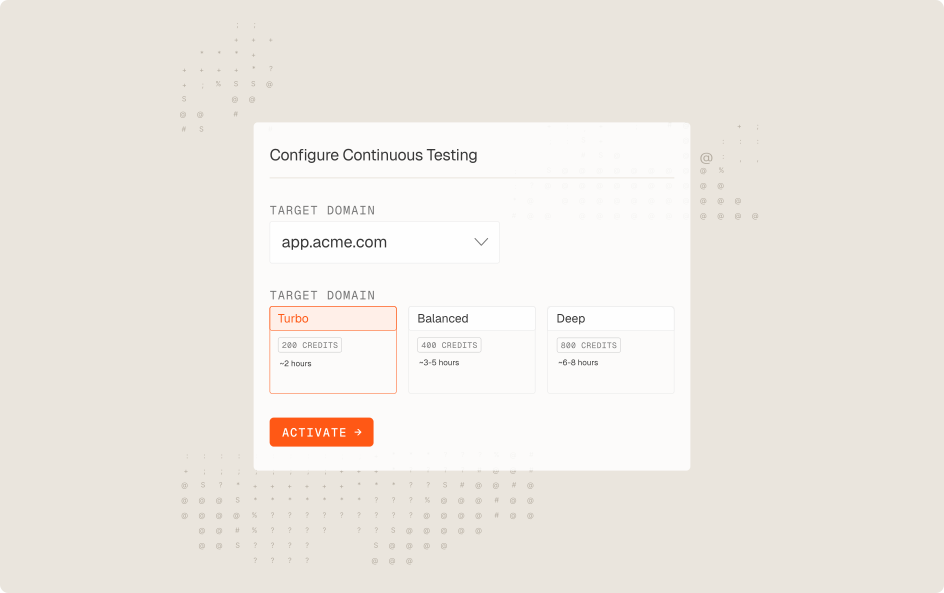
Schedule on demand, weekly, or monthly. First results in hours.
White Box
Agents also read your source code, so they can trace data flows, spot logic flaws, and find more in every run.
Schedule on demand, weekly, or monthly. First results in hours.
Validated patches
Every confirmed finding can end in a fix, whether it lives in code, cloud infrastructure, or network configuration.
Code patching via GitHub
Agents generate validated patches and open PRs directly in your codebase, each with a threat model explaining the vulnerability and how it was fixed.
Jira & Linear integration
Findings are automatically filed as tickets in Jira or Linear with full context. When a fix is deployed, agents retest to confirm the vulnerability is resolved.
Cloud config remediation
Agents remediate misconfigured cloud infrastructure directly, patching IAM policies, security groups, and resource configs across AWS, Azure, and GCP.
Network & infrastructure
Extend remediation to network-level configurations, firewall rules, routing policies, and access controls that agents discover and fix.
Agentic Control System
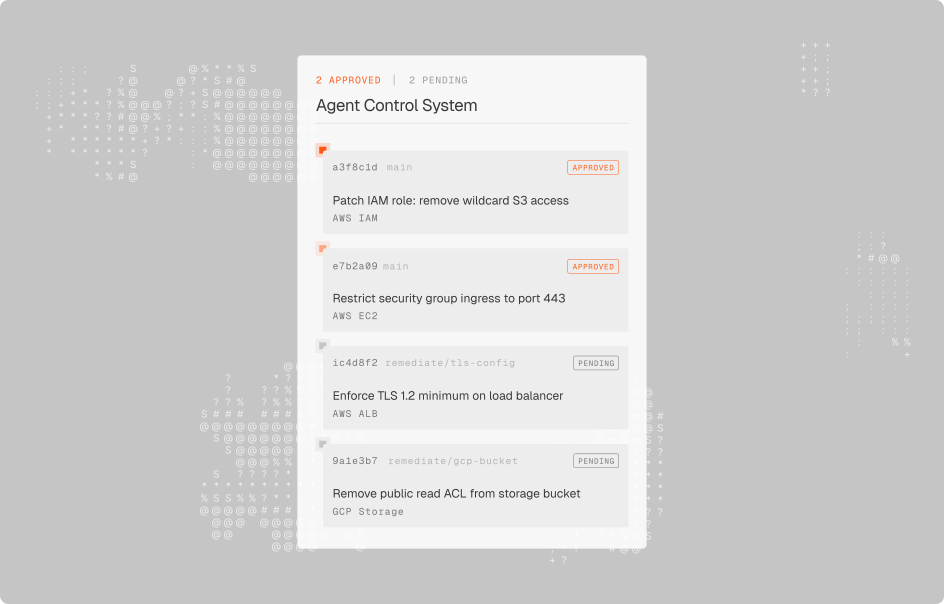
Agents fix more than code. When they change cloud configs, network policies, or infrastructure, the Agentic Control System records every change, routes it through approval, and lets you roll it back. Think git, for everything that is not code.
Version control
Every agent-made change is versioned with full before/after state, so you always know what changed and can roll back.
Approval workflows
Route changes through your existing approval process. Agents propose, your team approves, agents apply.
Full audit trail
A complete history of every remediation: who, what, when, and why. Built for compliance.
Speed with control
Agents move fast. The control system means they never move faster than your visibility.
One platform replaces the scanner stack
Agents run every capability below as part of every operation. Nothing separate to buy, configure, or monitor.
Penetration testing
End-to-end pen tests against your live environment with compliant, exportable reports.
Dynamic application security
Agents perform deep DAST analysis natively, with no separate scanner. Authenticated crawling, business logic testing, and API security in every run.
Vulnerability management
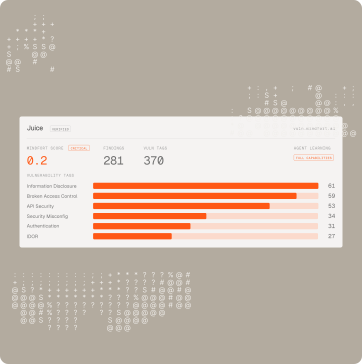
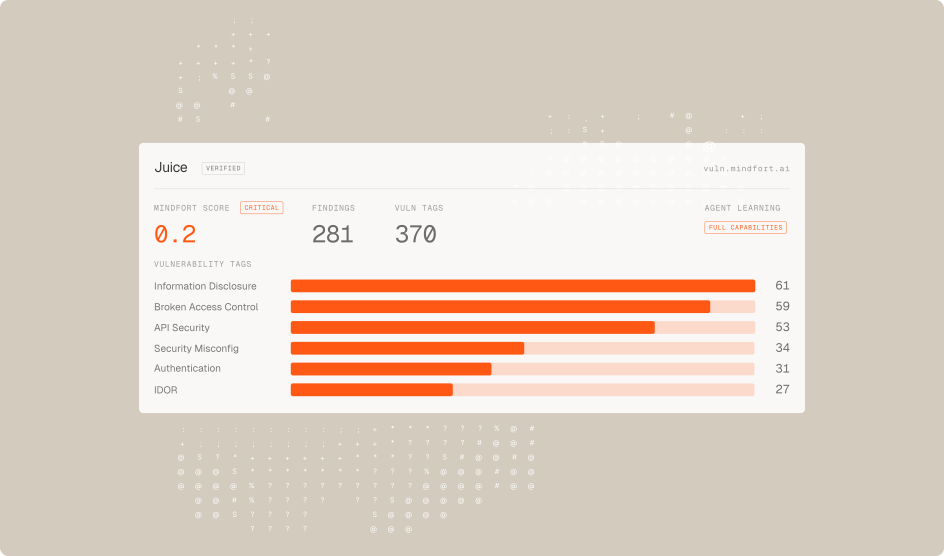
Findings are validated, deduplicated, risk-scored, and tracked over time. Agents triage so your team doesn't have to.
Software composition analysis
Agents identify vulnerable dependencies and open-source risks across your codebase as part of every operation.
Threat intelligence
Agents draw on real-time threat data to prioritize what matters, testing for actively exploited CVEs and emerging attack techniques.
Attack surface mapping
Continuous discovery and monitoring of every exposed asset across your organization: subdomains, APIs, cloud resources, and more.

Security that gets better the longer it runs
Agents never start from scratch. They remember your stack, your deploy patterns, and your defenses, so every run starts smarter than the last.
Environment-aware testing
Agents map how your teams build, deploy, and configure systems, tailoring their testing and remediation to your specific stack and conventions.
Continuous context building
Every operation deepens an agent’s understanding of your environment. Past findings, infrastructure changes, and deployment patterns all inform future runs.
Adaptive attack strategies
Agents remember what worked and what didn’t. They evolve their approach based on your specific defenses, getting sharper with every cycle.
Efficient at scale
Agents skip re-discovering what they already know. That time goes into deeper testing and broader coverage.
Agent First
MCP native by default, persistent memory across runs, and a control surface designed for steering agents instead of configuring scanners.
MCP native by default
Agents discover and call tools through the Model Context Protocol, so your scanners, code hosts, ticketing, and cloud APIs plug in without glue code. Add a new MCP server and agents start using it on the next run.
Built to run continuously
Trigger on every CI/CD push, on a schedule, or always on. Agents probe, adapt, and remember what worked across operations instead of starting from scratch every time.