MindFort for Vulnerability Management
Most vulnerability programs drown in findings nobody validated. Agents prove what's exploitable, fix it, then re-run the exploit to confirm it's gone.
Request a DemoA backlog of what's actually exploitable
Scanner output tells you how many rules matched. Agents test each finding and keep only the ones that survive.
Nothing gets filed on a hunch
Every finding that reaches your queue has a working exploit behind it. The rest never gets filed in the first place.
Four tools, one issue
The same flaw found by every scanner you run arrives once, with all of the supporting evidence attached to it.
Ranked by blast radius
Prioritization reflects what an attacker could reach from the flaw: the accounts, records, and systems downstream of it.
From finding to resolved.
The parts of vulnerability management that usually consume a full-time role, handled by agents.
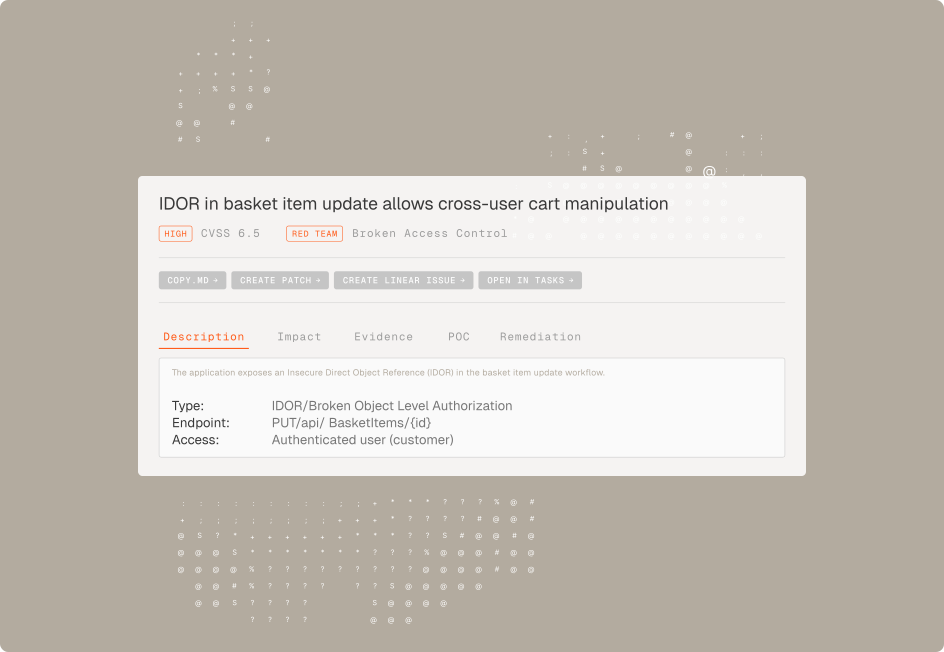
Every finding confirmed with a reproducible exploit before filing
Duplicates merged across scanners, pentests, and bounty reports
Risk scored on exploitability and business context
Ownership routed to the team that owns the code
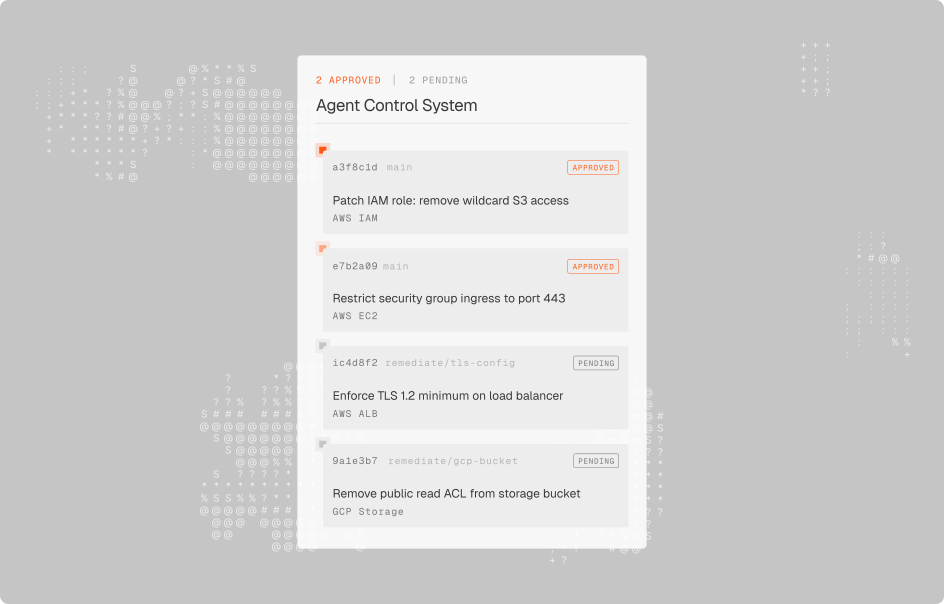
Verified patches delivered as pull requests
Automatic retest once a fix reaches production
SLA and mean time to remediate tracked per team
Audit-ready evidence generated as the work happens
Evidence your auditors already accept
Reports assemble themselves out of work the agents already did, so audit season stops being a project of its own.
Reports generated on demand
Findings, methodology, severity, and remediation status compile into a pentest report on demand.
A complete audit trail
Every agent action, remediation, and retest is logged and filterable by team, environment, and surface.
Ready for auditors and customers
Export for SOC 2 and ISO 27001 or attach to a security questionnaire without assembling anything by hand.
Metrics that tell you whether the program works
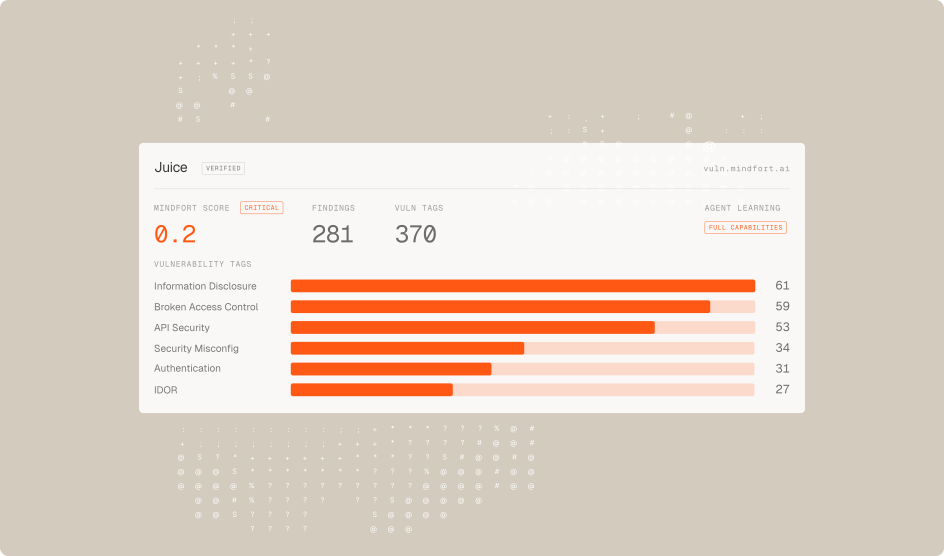
Not how many findings were opened, but how much exploitable risk actually left your environment.
Exploitable findings trending down, by severity and age
Mean time to remediate, tracked per team and per surface
Fix verification rate, confirmed by re-running the exploit
Noise removed before it ever reaches an engineer
Coverage across every registered target and environment
Full remediation history retained for every asset
Frequently
Asked Questions
What reaches the queue, how it gets ranked, and what an auditor sees at the end.
For SOC 2 and ISO 27001, auditors have accepted these reports. Regulated banking is stricter: some examiners still expect a named tester accountable for the engagement, and the pattern that works there is your own pen tester scoping and signing off while agents do the testing volume. If your regulator requires a third party rather than an internal team, MindFort is the third party.
Every finding carries a CVSS 3.1 base score, and ATT&CK technique mapping is available through the API. Both sit alongside a severity scored on exploitability and blast radius in your environment, because a CVSS 9.8 sitting behind three compensating controls and a 6.1 on your auth boundary should not hold the same queue position.
Yes. They are distinct sections with their own methodology, scope, and dates rather than one merged document. This matters when both go to a regulator that treats them as separate obligations.
The full report as PDF, individual findings as markdown, and everything as JSON over the API. Assessment logs export with every request and response, which is what auditors ask for when they want to see the work rather than the conclusion.
Only once you tell us about them. Agents test from an attacker's position and assume nothing is in place, which is the right default and also why a first engagement surfaces things your team already accepted. Upload your architecture, policies, and accepted risks, and agents apply that context on the next run. Marking a finding as accepted teaches them too.
No, and not by accident. That is a data subscription business rather than a testing one, and most platforms bundling it are reselling someone else's feed. Buy it separately if you want it.
They stay inside the assessment, encrypted in transit and at rest, and they are destroyed with the rest of the assessment environment when the engagement ends. Nothing an agent discovers is used to train a model.
Findings and remediation history persist, so agents can build on them and you can show an auditor the trail. The assessment environment itself, including anything the agents picked up while working, is destroyed on completion.