MindFort for OffSec

Agents that attack your environment the way a real adversary does, and never stop. Every finding arrives with the exploit that proved it.

Request a Demo

An adversary that never stops working

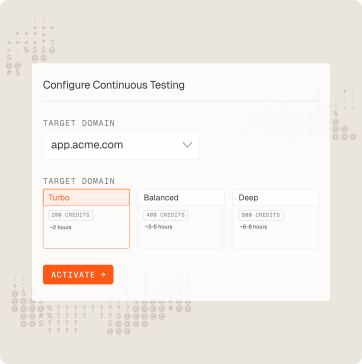
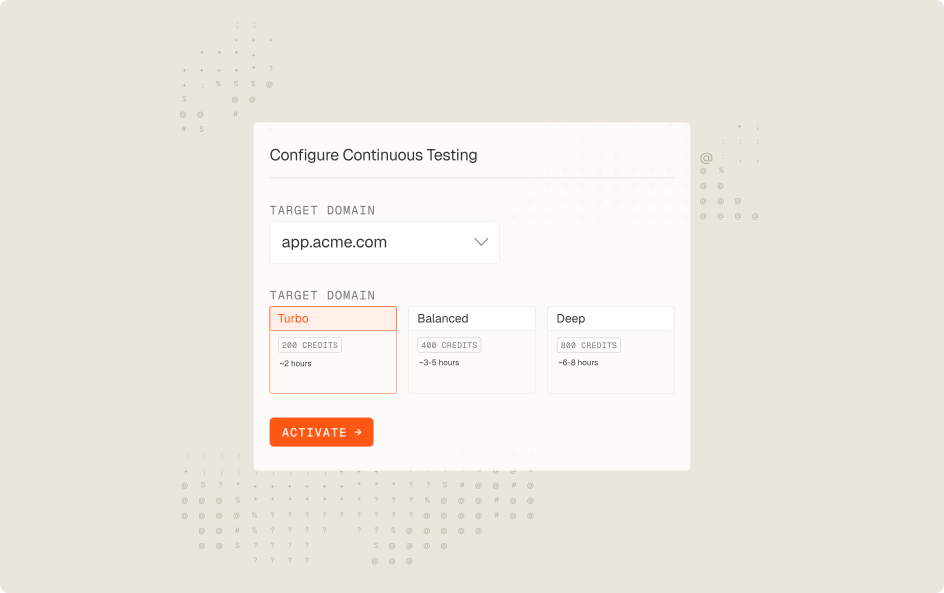
Point-in-time engagements leave you blind for eleven and a half months a year. Agents run continuously, so your posture reflects today.

Always running

Agents probe your targets around the clock and catch new exposure the day it appears.

One target, many angles

Specialized agents work in parallel: auth testing, injection, SSRF, API fuzzing. Each pursues its own line of attack.

It improves the longer it runs

Every engagement teaches the fleet what your stack looks like and where it bends. Coverage compounds across runs.

Agent Runtime dashboard showing four active agents (Auth Tester, Injection Scanner, SSRF Detector, and API Fuzzer) with runtime hours and finding counts

How agents operate in your environment

Real offensive tradecraft, with the scoping and controls that let you actually turn it on against production.

Black box and white box engagements from one platform

External perimeter and internal network ranges, same workflow

Authenticated testing across credentials, sessions, and user roles

Scope enforced by domain, IP range, environment, and cloud account

Destructive actions gated behind explicit permission

Every request and response logged for replay

Rate limiting tuned so production stays healthy

Findings confirmed with a reproducible exploit chain

Full engagement history retained for comparison over time

Proof for every finding

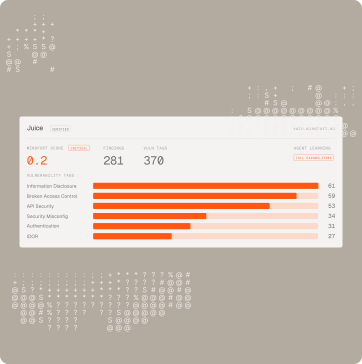
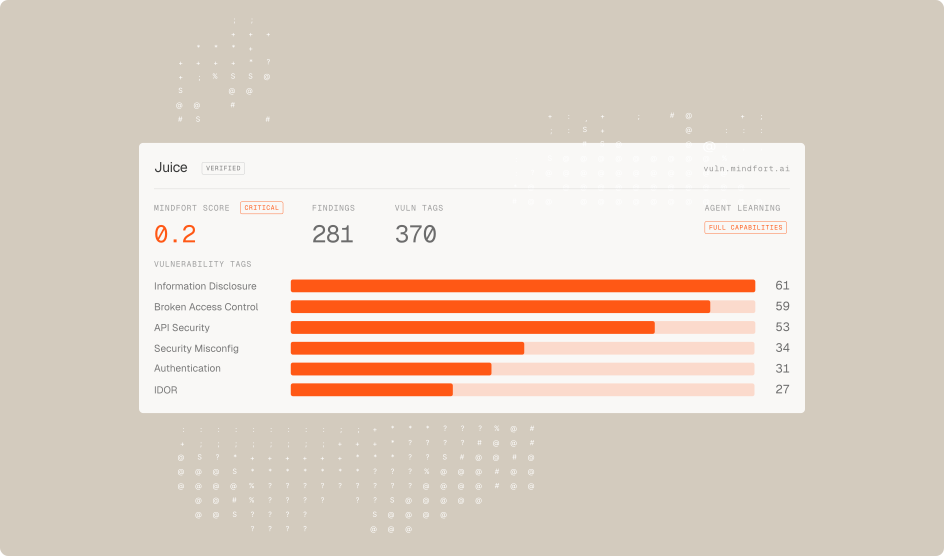
Every finding ships with the exploit that proved it, which is exactly why the queue stays short enough to act on.

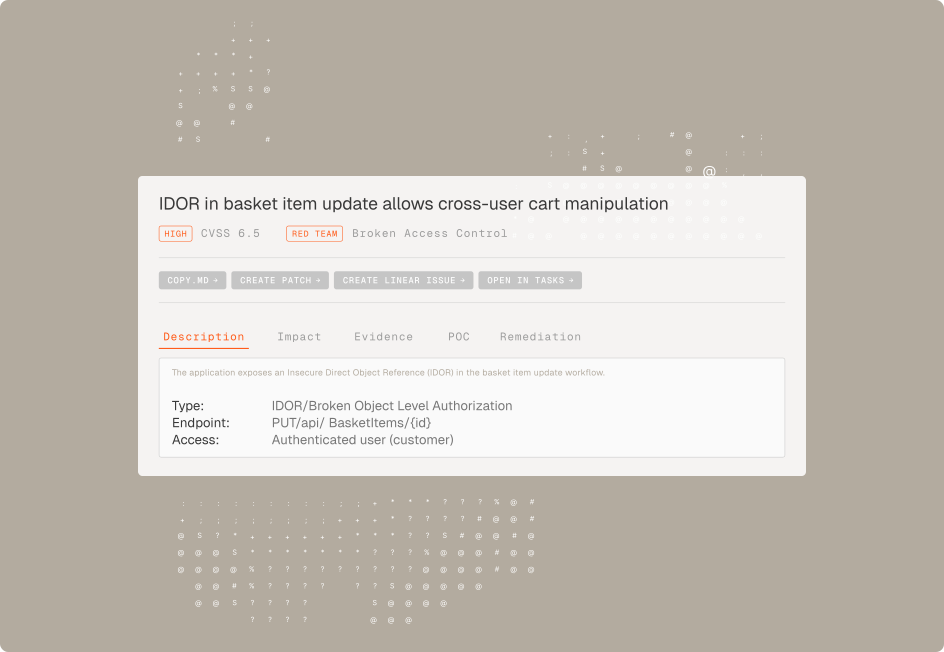
Vulnerable Findings list showing confirmed issues with critical, medium, and low severity badges, including IDOR in basket item update, reflected XSS in order tracking, and mass assignment via userId spoofing

Confirmed exploits only

Agents report what they broke, along with the request sequence that broke it.

Under 1% false positives

Every finding is validated against the running target before it reaches your queue.

Severity that reflects reality

Scored on exploitability and blast radius in your own environment.

Offensive coverage across the whole surface

Web, API, cloud, and the seams between them. Agents chain findings the way an attacker would.

External web applications and public marketing surface

REST and GraphQL APIs, authenticated and unauthenticated

Internal network ranges, hosts, and the services behind them

Cloud configuration and identity misconfiguration

Multi-step attack chains across separate weaknesses

Authentication, session, and access control boundaries

Exploitation evidence captured for every confirmed finding

Frequently
Asked Questions

What agents do against a live target, and what keeps them inside the lines.

Both. An internal IP range registers as a target the same way a domain does. Agents reach it over a fixed set of egress addresses you allowlist, so there is no container to deploy in your environment and no credentials sitting there between engagements.

Over dedicated egress IPs that you allowlist at the firewall or WAF. That is the whole setup. Bringing a new target online takes about ten minutes: the address, the allowlist entry, and a set of credentials if you want authenticated testing.

Yes. Agents fingerprint what is listening, check versions against known vulnerabilities, then try to exploit rather than infer from a version string. When nothing known matches, they keep probing for what has not been catalogued yet. Every finding arrives with the request sequence that produced it, so your team can replay the path.

A separate agent whose only job is watching the others. It reviews every action before it executes and halts anything outside the rules, including destructive commands a model might reach for on its own. That sits on top of the limits you set yourself: scope by domain and IP range, request rate, and permission gates per environment. Destructive actions stay off unless you turn them on.

By default, loud enough that your SOC should see the engagement, because most teams want confirmation the test ran. If you are doing adversary emulation rather than a pen test, a low-footprint mode trades speed for a smaller signature. Say which one you are running before the first engagement, because it changes how the agents get configured.

For emulation, yes, and it is a fair objection. A real attacker gets no allowlist entry, and a defender who blocks the range has technically won. Allowlisting exists so the engagement measures your application and infrastructure instead of your WAF. If what you want to test is whether detection and blocking hold up, run us without it and see what gets through.

A blend of frontier models from OpenAI and Anthropic alongside security models we post-train ourselves. Which model is in front matters less than what surrounds it: the same frontier model that performs well here falls off sharply without the orchestration, memory, and validation layers underneath. We evaluate each new release against our own targets and switch when one wins.

Yes, through task agents, which are separate from the pen testing fleet and directly addressable. Give one a hunch, a policy file, or an existing finding to chase, and it works with the same tooling and the same memory of your environment. Results publish to the same findings database, so what you chased by hand lands in the same report as the scheduled run.

Deploy an autonomous security engineer