MindFort for AppSec
Agents read your code and exercise your running app. Every flaw they confirm comes back as a pull request you can merge.
Request a DemoSecurity that runs on every push
MindFort installs as a GitHub Action and as a live target. Every push gets reviewed and every deploy gets tested, so nothing waits for a quarterly window.
Review every pull request
Agents read the diff in the context of the whole codebase, flagging changes that introduce genuinely reachable vulnerabilities.
Test the running application
Static analysis only sees the source. Agents also exercise the deployed app, confirming which flaws are actually exploitable.
Block on what matters
Fail the build only on confirmed exploits. Set the severity threshold per branch, so a low-severity finding never blocks a merge.
What agents actually test
Deep application testing on every run.
Injection across SQL, NoSQL, command, and template engines
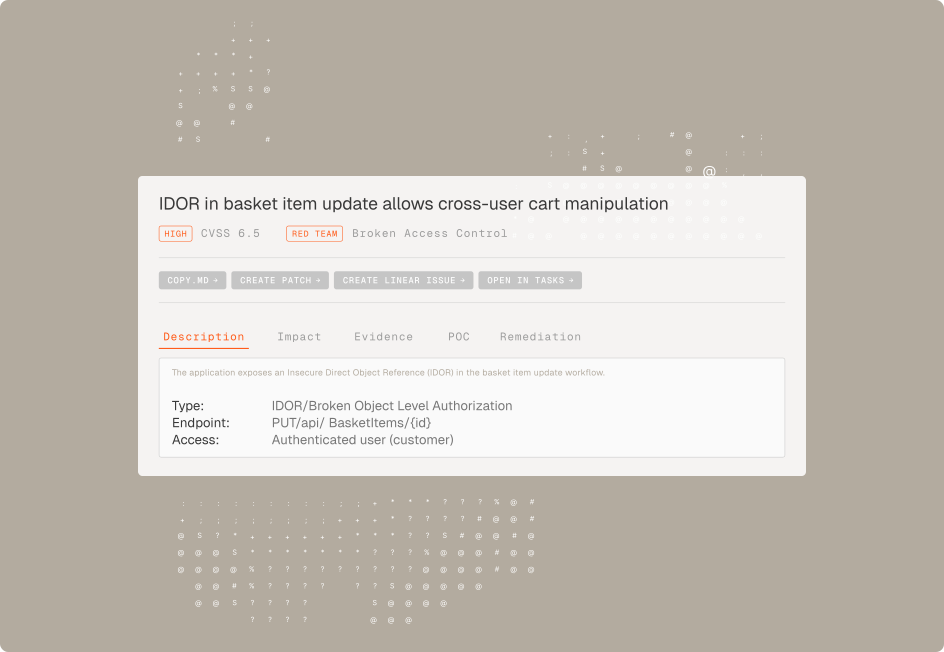
Broken access control, IDOR, and privilege escalation
Authentication and session handling flaws
Business logic abuse in multi-step workflows
SSRF, XXE, and unsafe deserialization
Dependency vulnerabilities that are actually reachable
Secrets committed to source or leaked in responses
Authenticated API testing across REST and GraphQL
Fixes that arrive as pull requests
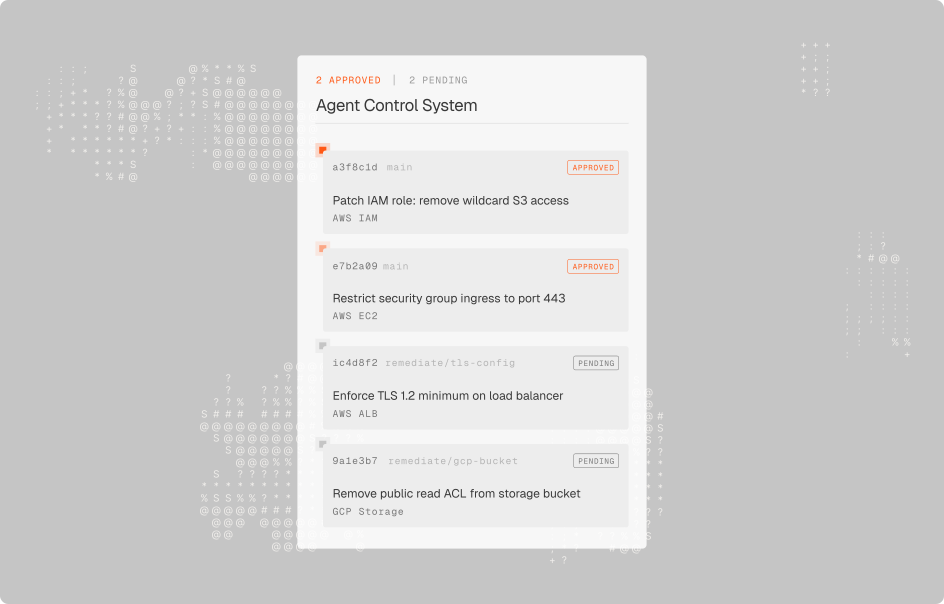
A finding your team can't act on is just a ticket. Agents write the patch, test it, and open the PR against the right branch.
Patches you can merge
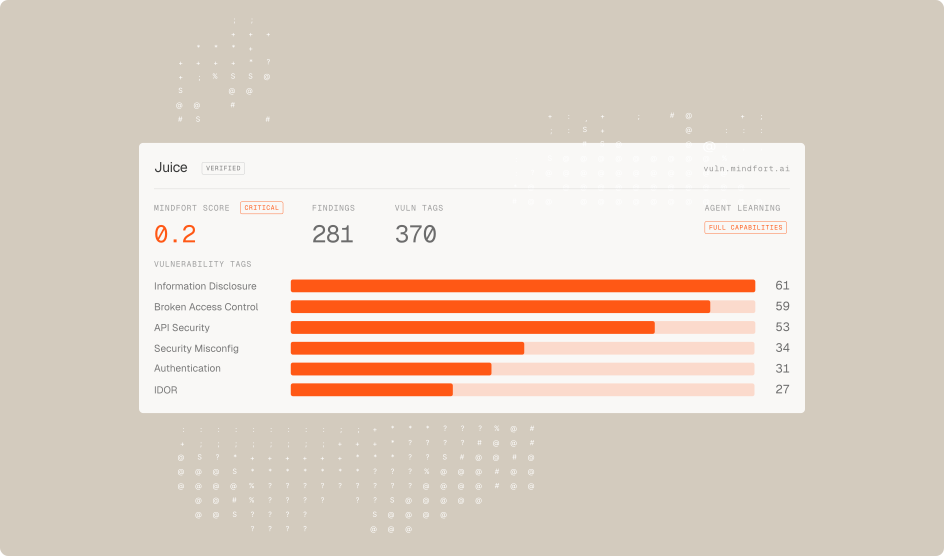
Each confirmed vulnerability comes with a diff and a severity score.
Verified before you see it
Agents apply the fix, re-run the original exploit, and confirm it fails before the pull request is ever opened.
Your review process, unchanged
PRs land in your repo, on your branch, with your checks. Nothing merges without a human approving it first.
Built for the way engineering teams work
Security that meets developers in the tools they already use, with the context they need to act.
Fixes delivered as pull requests, on the branch you specify
Runs as a GitHub Action on every push and pull request
A threat model attached to every finding, explaining the exploit
Findings filed to Jira and Linear with reproduction steps
First confirmed findings within hours of connecting a target
Automatic retest once the fix reaches production
Frequently
Asked Questions
How agents fit alongside the code review, CI, and scanners you already run.
Both, in the same engagement. Agents read the diff in the context of your whole repository, then exercise the deployed application to see which of those code paths an attacker can actually reach. Nothing runs against a copy or a simulation of your app. The target is the environment you point us at, which for most teams is staging.
Most teams retire their DAST license first, because that is the tool agents overlap with directly. SAST and SCA keep their place in the pipeline, but far less of what they escalate reaches an engineer: agents only file a dependency or code issue once they have reached it in the running application and proved it exploitable.
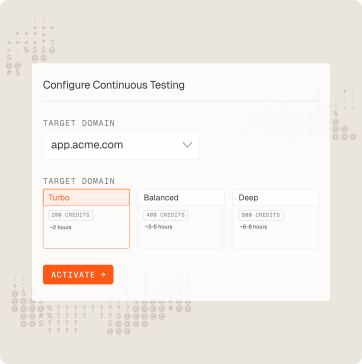
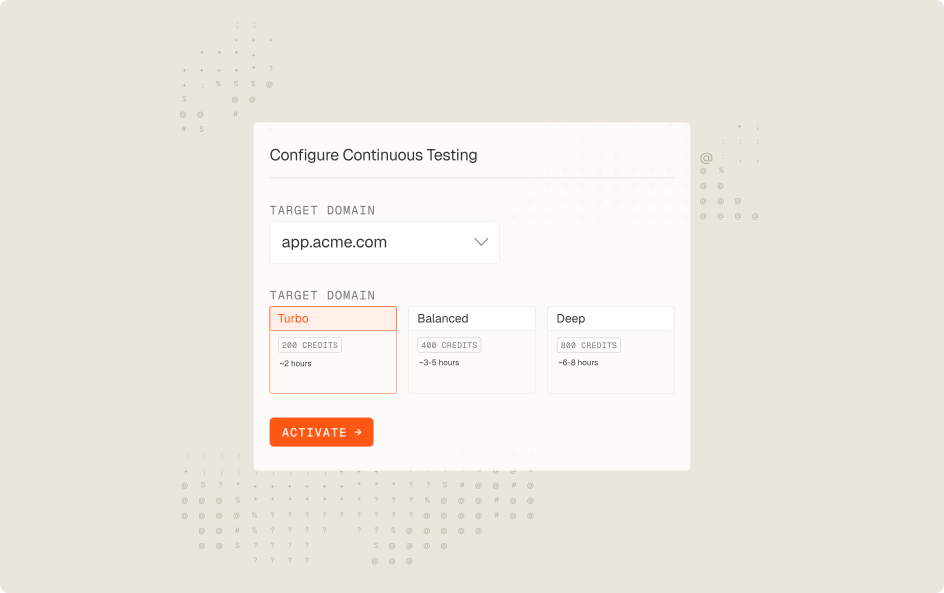
Either. On a pull request, agents test the diff against your staging deployment, which keeps the run short enough to belong in CI. On a schedule, they test the full target and build on what earlier runs found. Both share the same memory of your stack, so a finding from a pull request informs the next full engagement.
Yes. Agents authenticate with whatever you provide: API keys, username and password, or an MFA flow. You can also give them two separate sets of credentials so they can test the authorization boundary between two accounts, which is how most IDOR and cross-tenant bugs surface in the first place.
There is no cap. Scope is set per target, and one target covers the repositories that make up a single application. A monolith plus a dozen supporting services counts as one target.
One agent with a browser will find real bugs. A single engagement here runs over 250 agents against the same target in parallel, each working a different line of attack, and they keep a shared memory of your stack between runs, so the tenth engagement starts from everything the first nine learned. The harness and that accumulated context are what separate the two.
No. Web applications, APIs, cloud configuration, and network targets are covered. iOS and Android are not, and there is no date for them. If mobile is the surface you need tested, this is the wrong tool for it.